REAKT LIGHTS
Customizable audio reactive lighting system
Reakt Lights is an audio-reactive lighting system originally commissioned for The Canary Test gallery in Los Angeles, CA, along with an easy-to-use interface for the gallery to program future sound pieces. It has since grown into a broader effort: building an affordable, plug-and-play lighting system for venues that want responsive, professional-feeling lighting without the cost of professional gear.
Backend + Interface Build
Input audio signals are fed to TouchDesigner where set frequencies can be isolated, normalized then convert DMX. The signal is then converted and fed into a Chauvet DMX Dimmer/Switch Pack that can break out up to 4 channels.
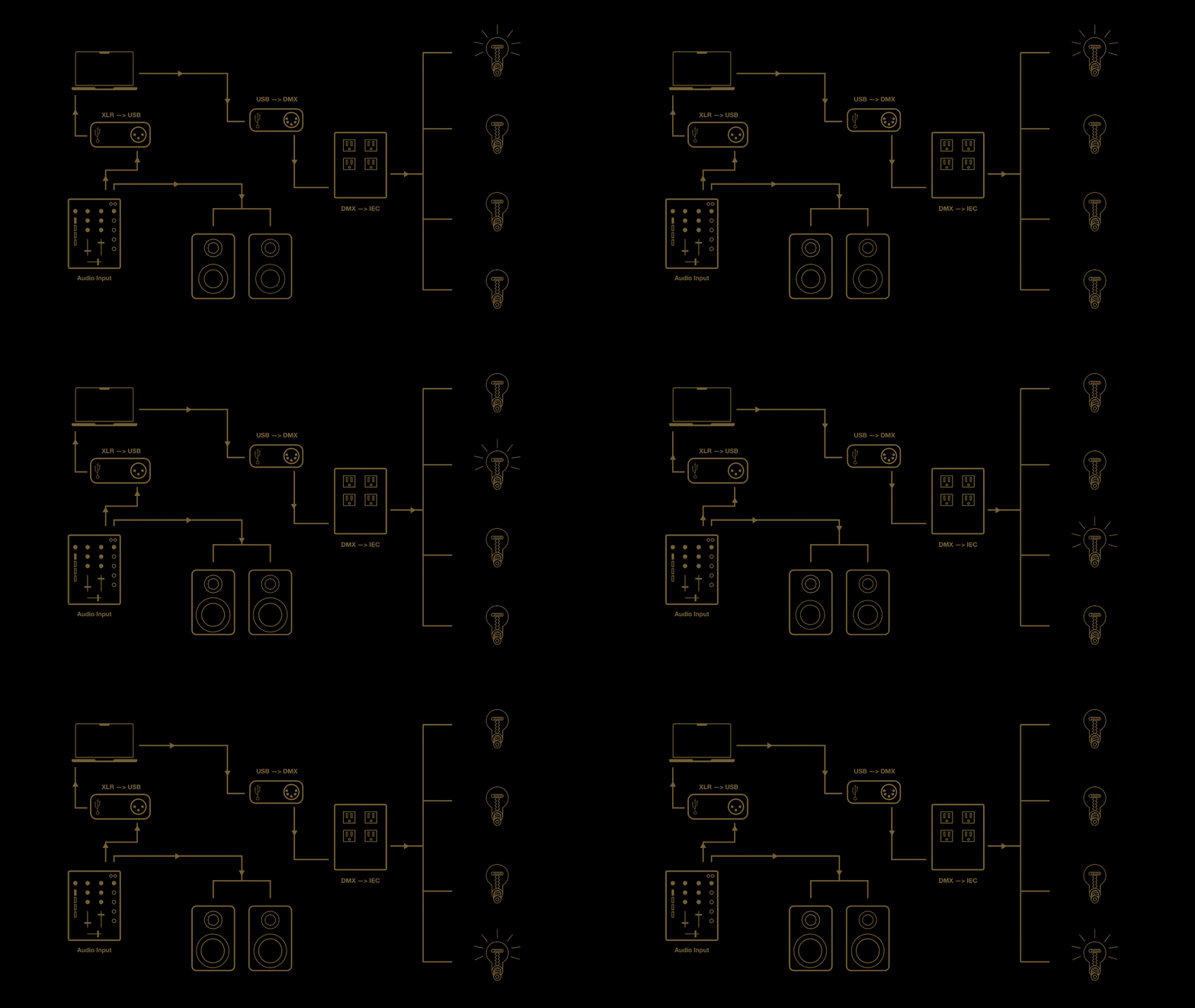
Early Tests
Version 2
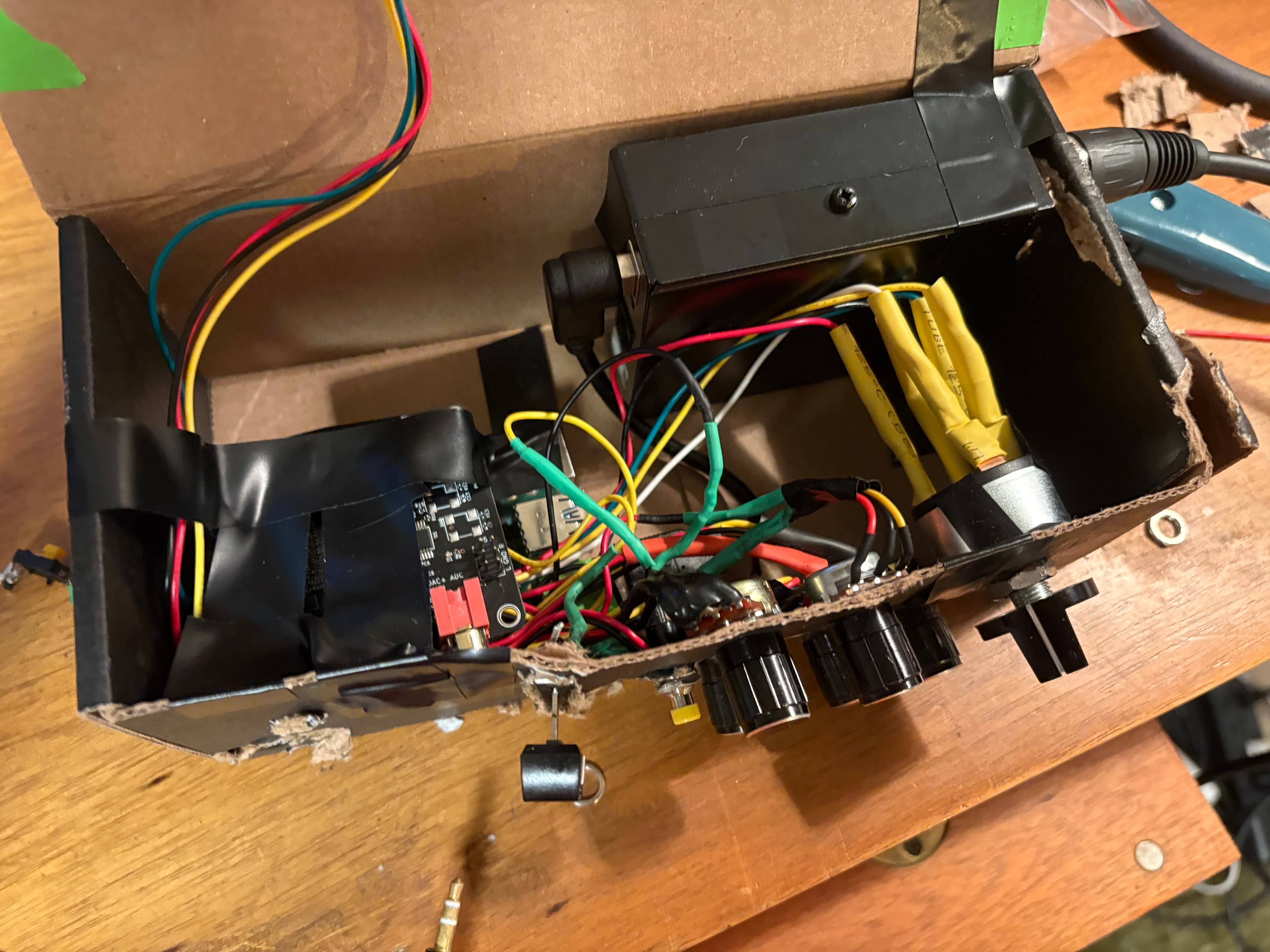
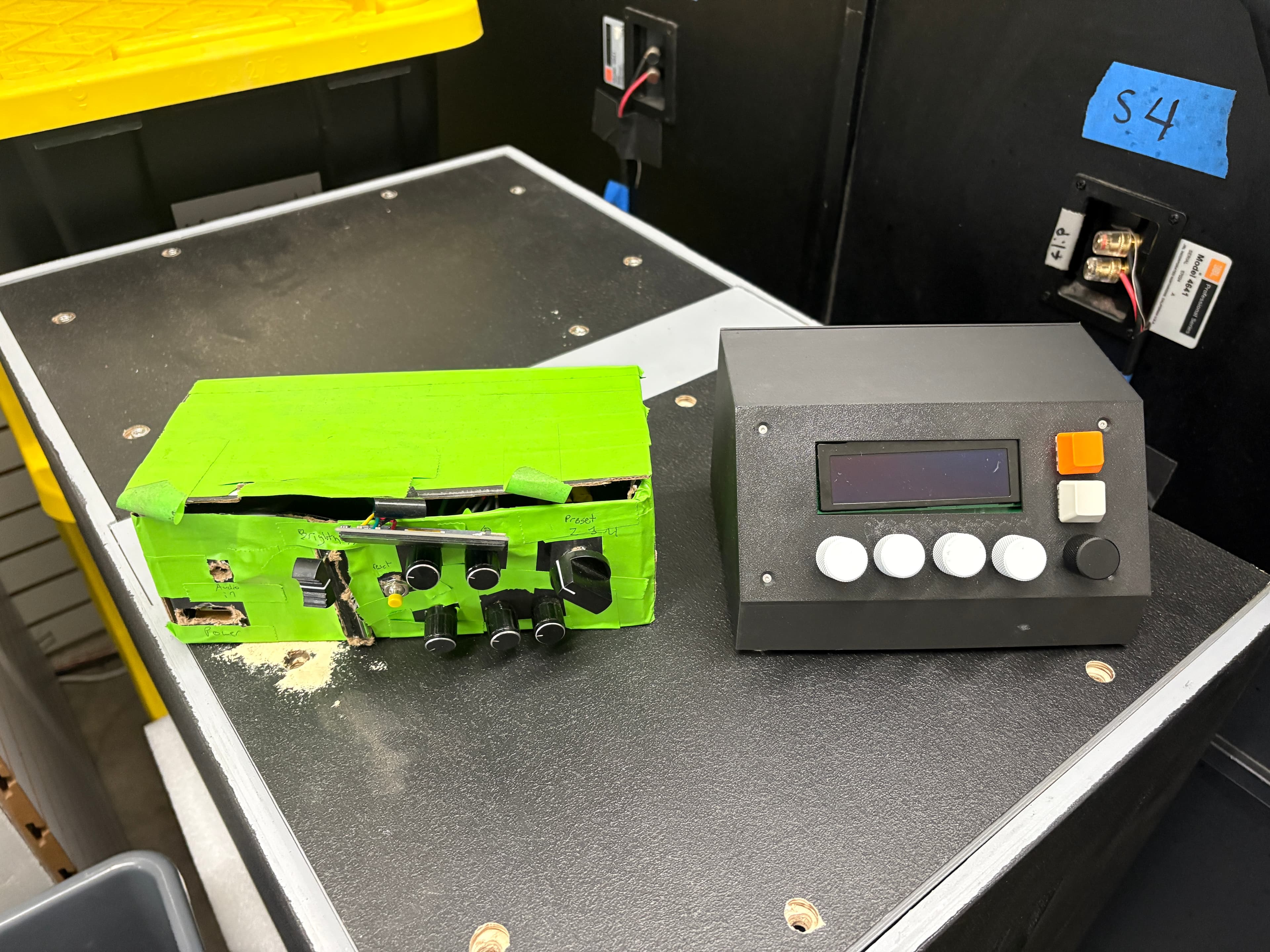
Next up was to get rid of the computer and put the code onto a raspberry pi. Then wire it up to a basic prototype for controls. "Make it exist first, then make it pretty."
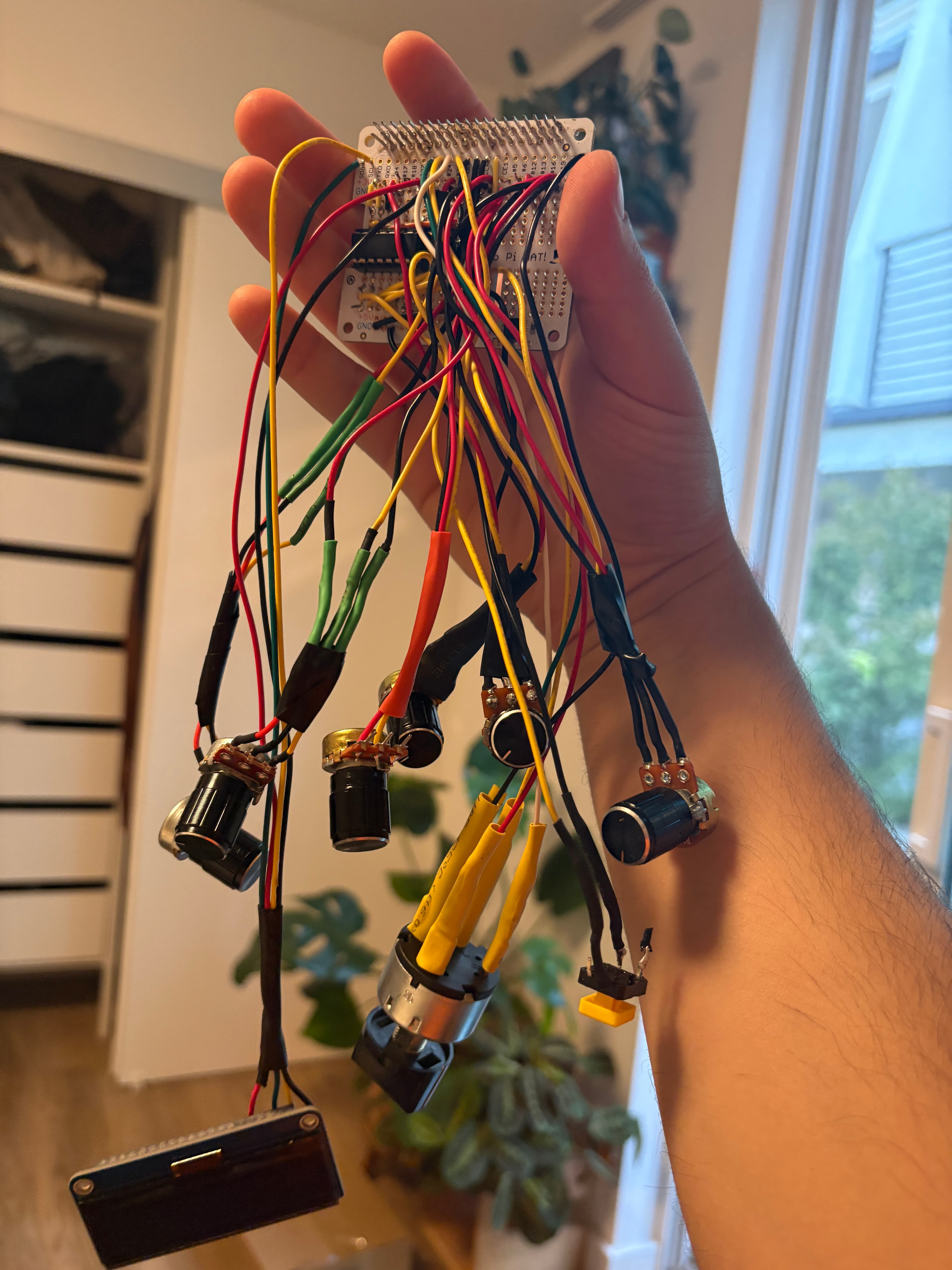
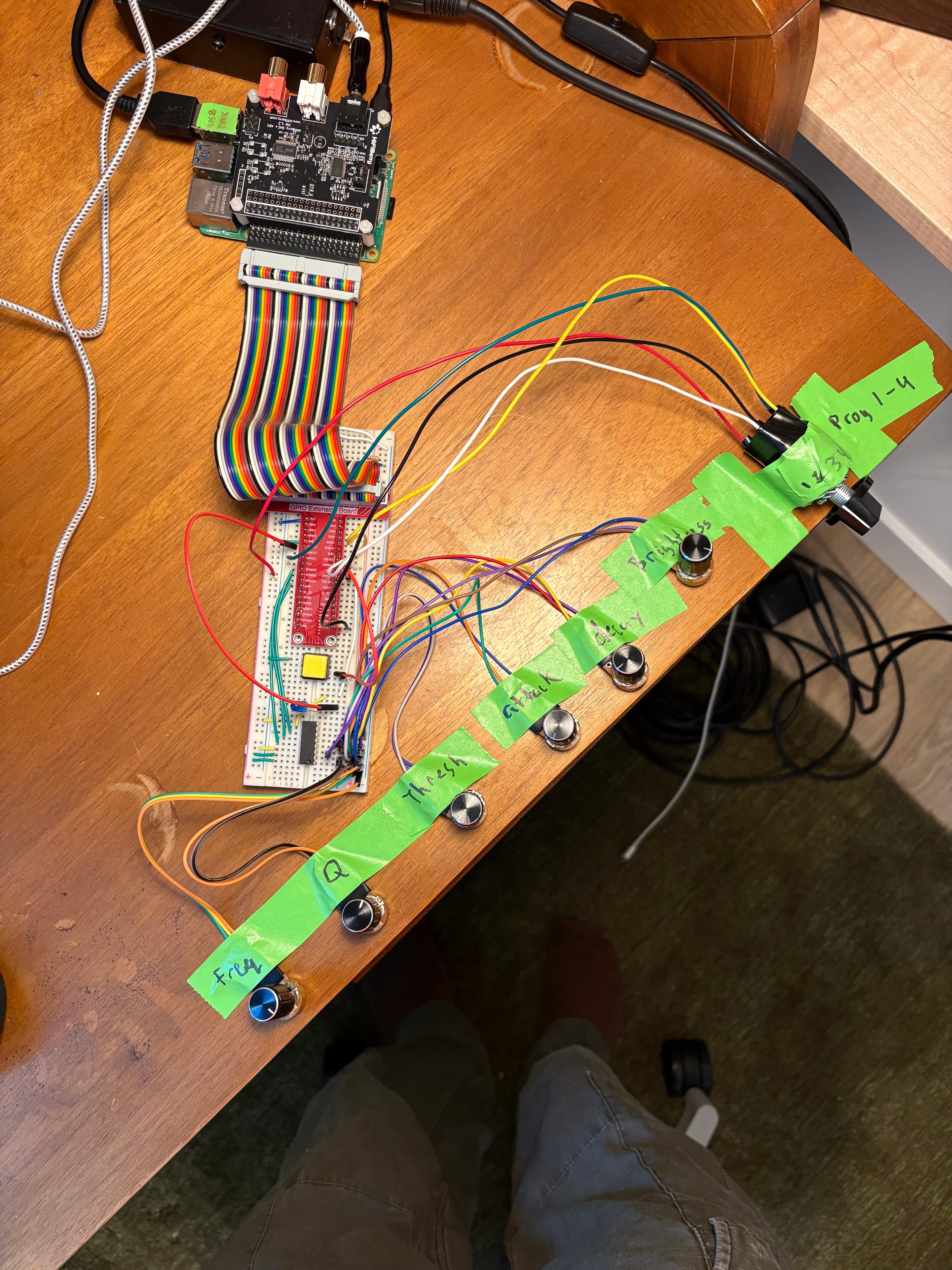
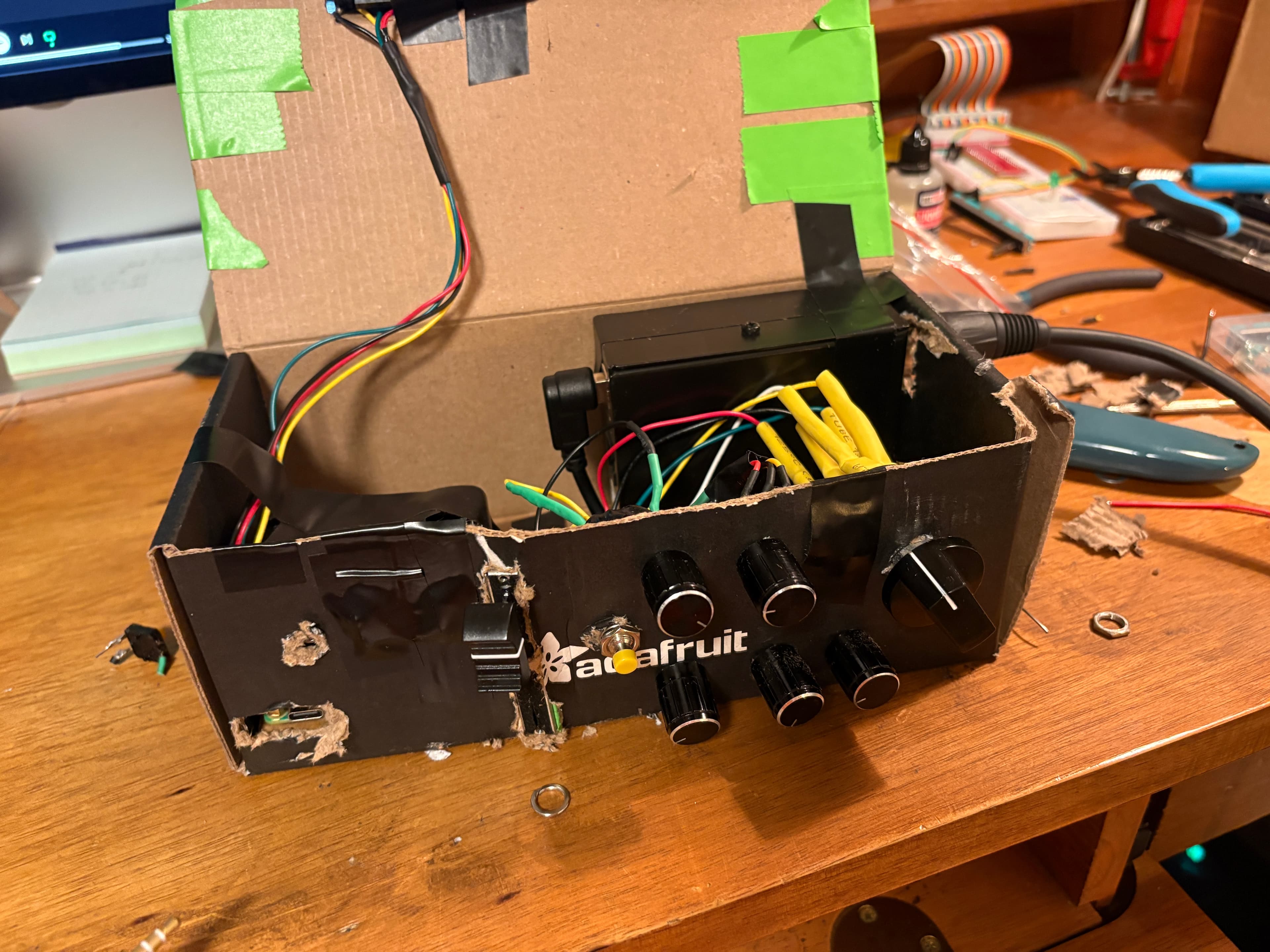
Version 3
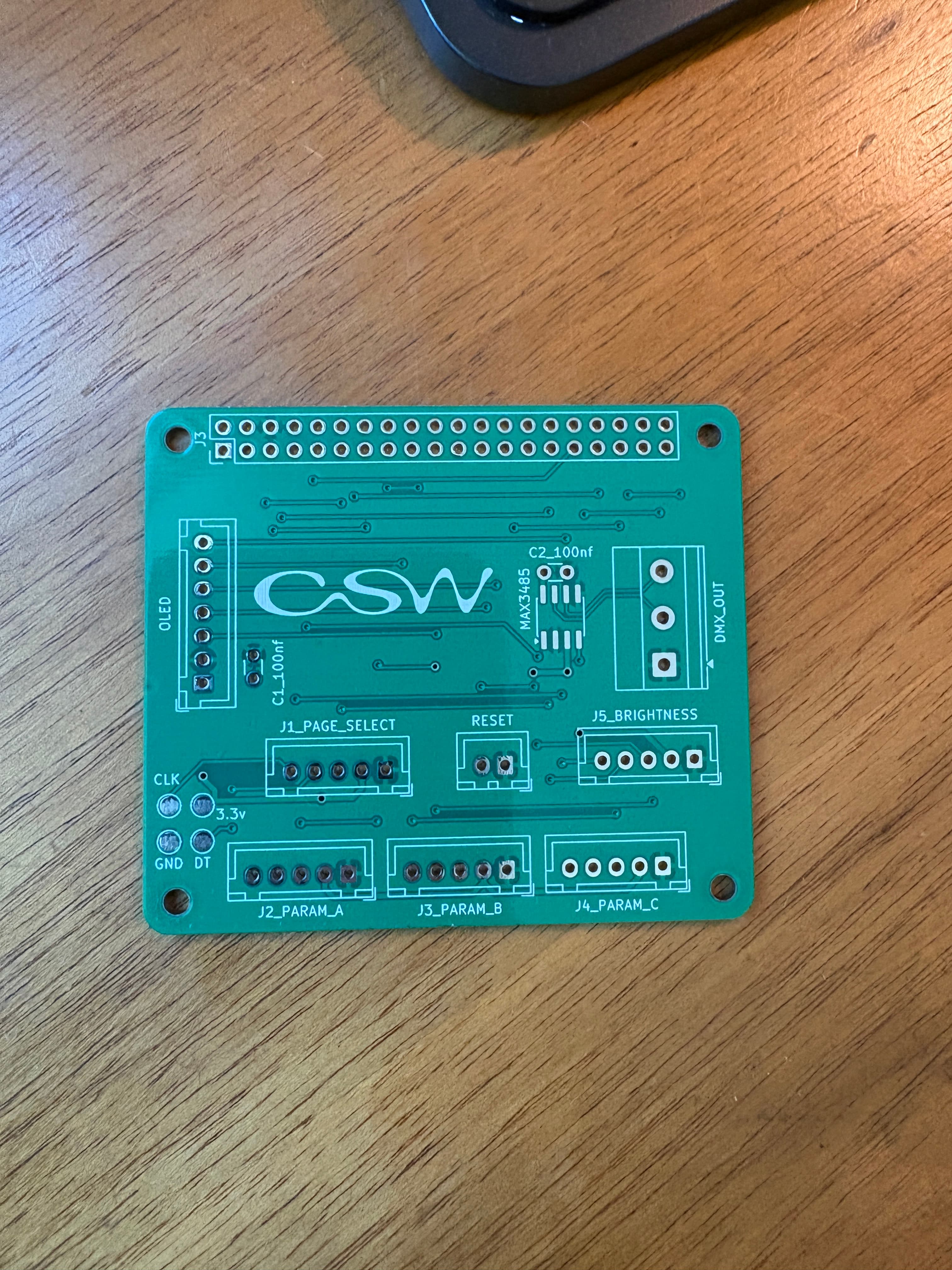
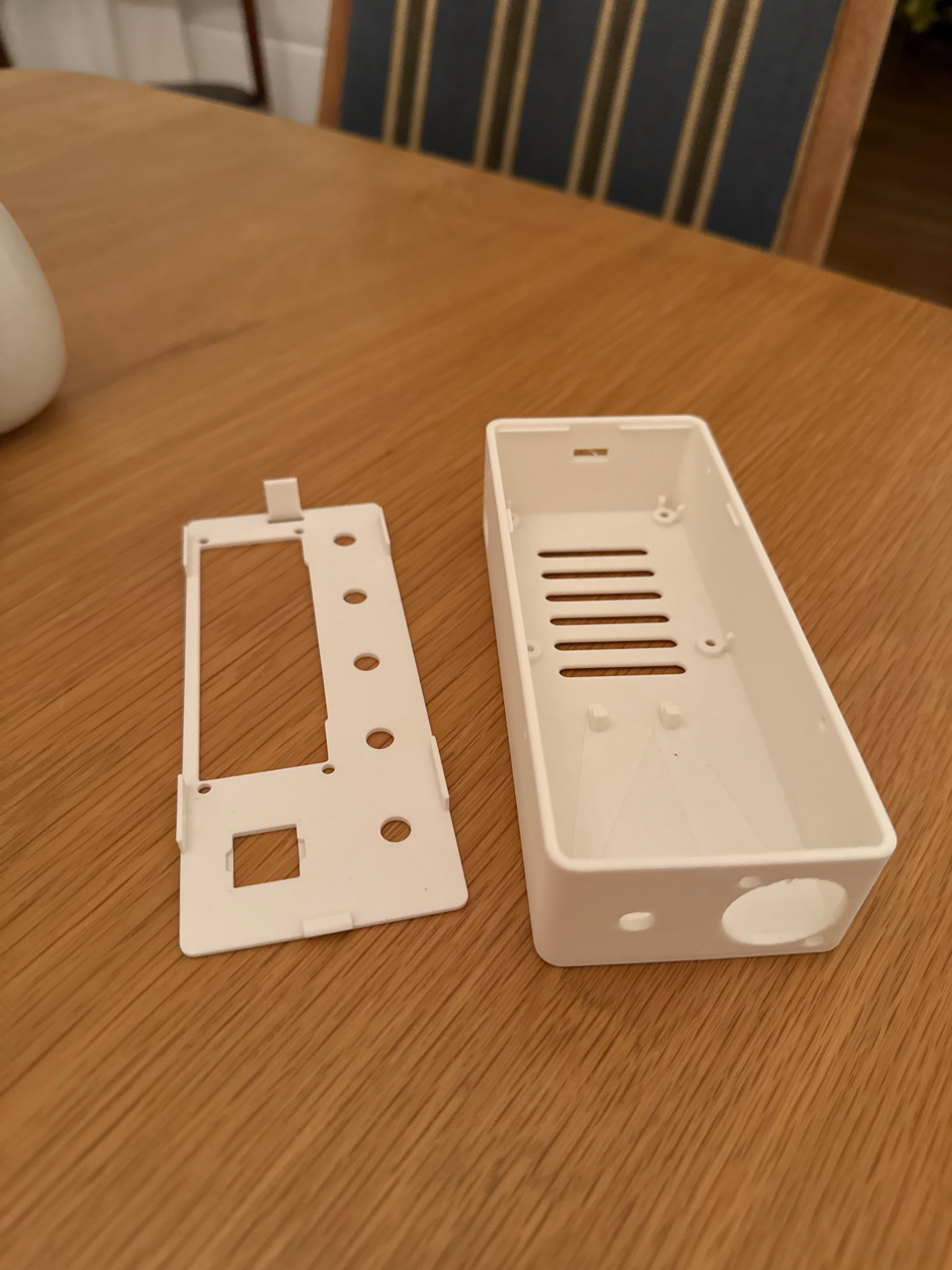
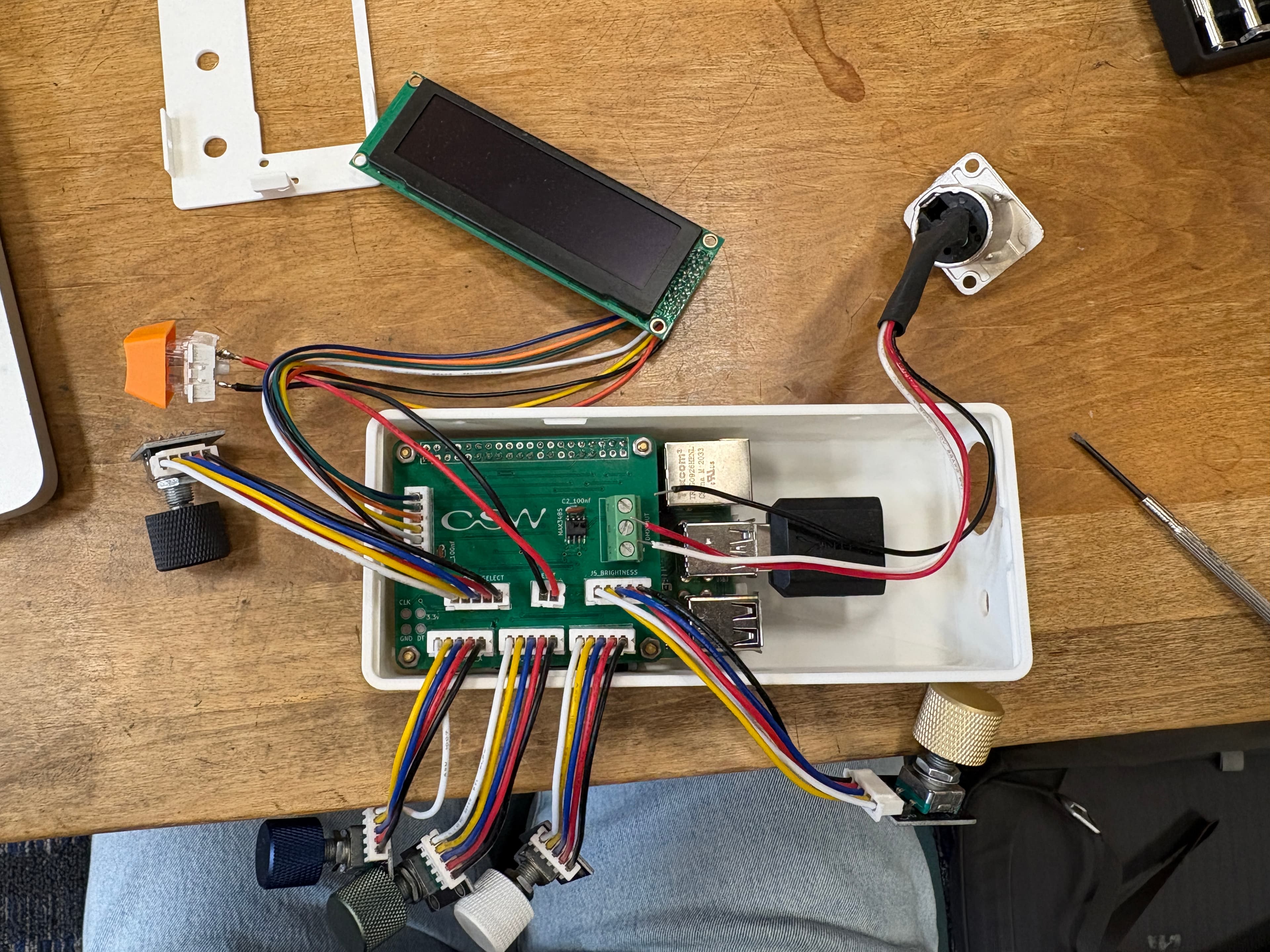
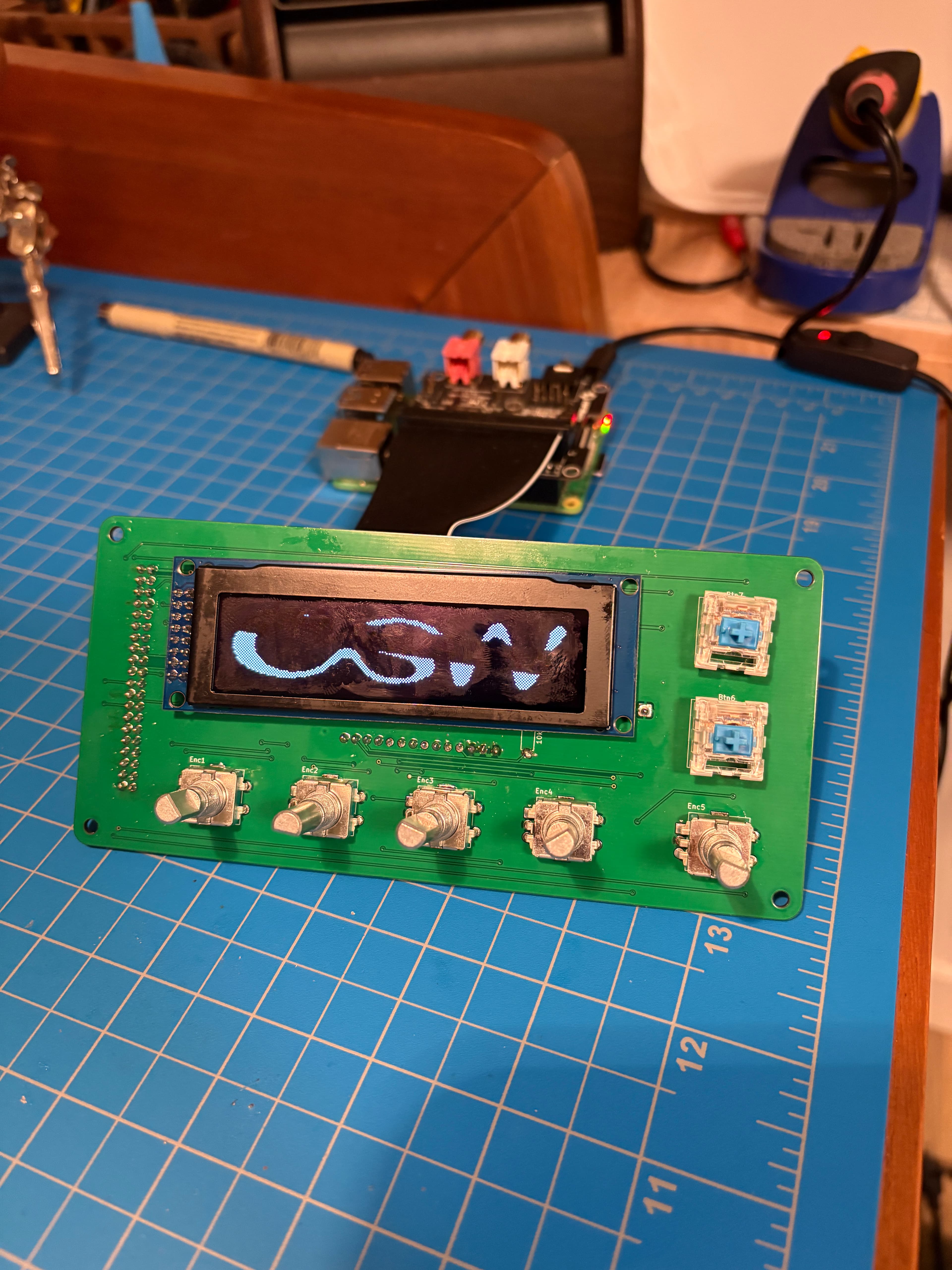
Now to make it pretty. To reduce cost and make it manufacturable and reproducible, I printed my own custom PCB, removed expensive interfaces and 3D printed a case to house everything.
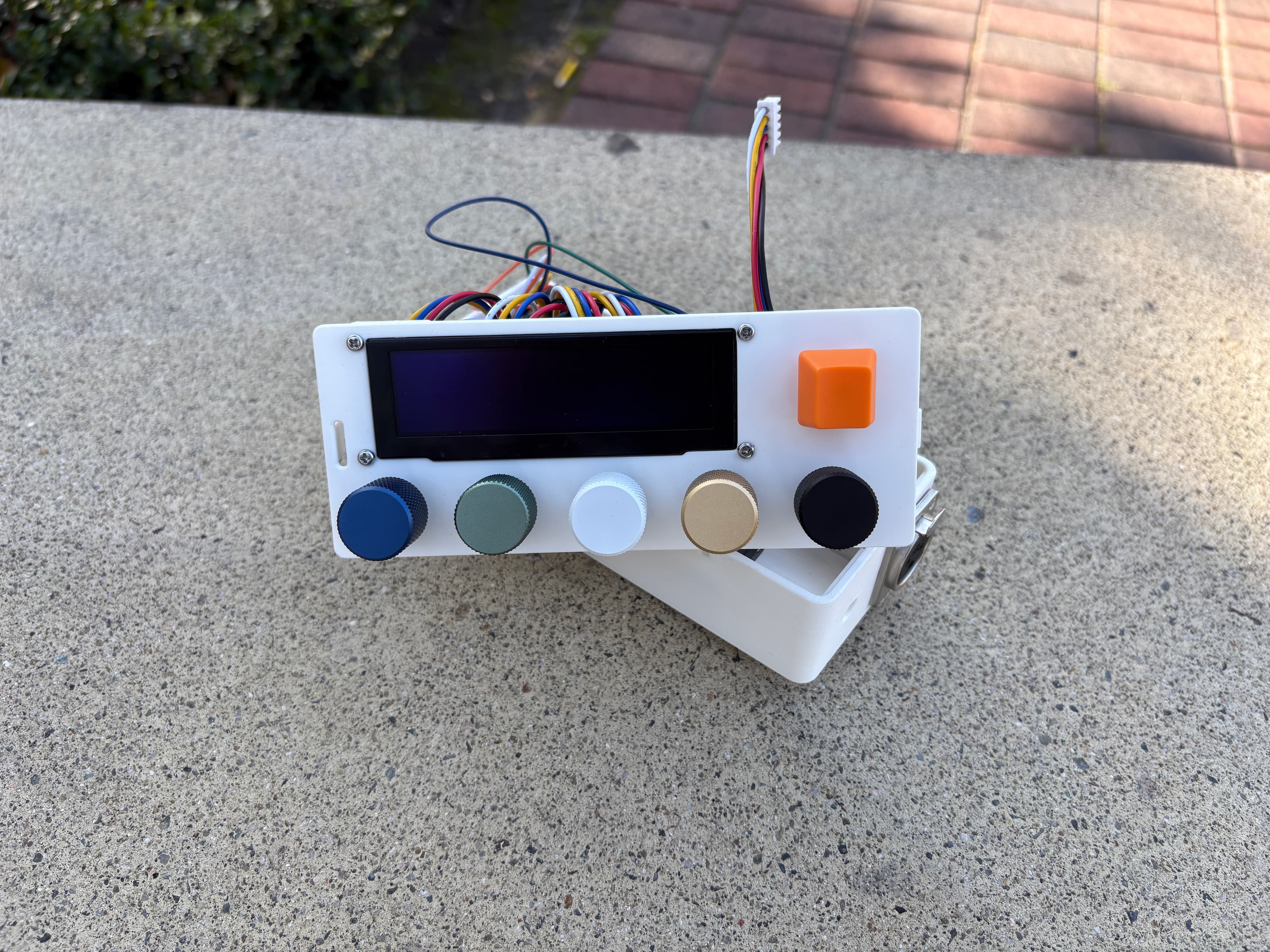
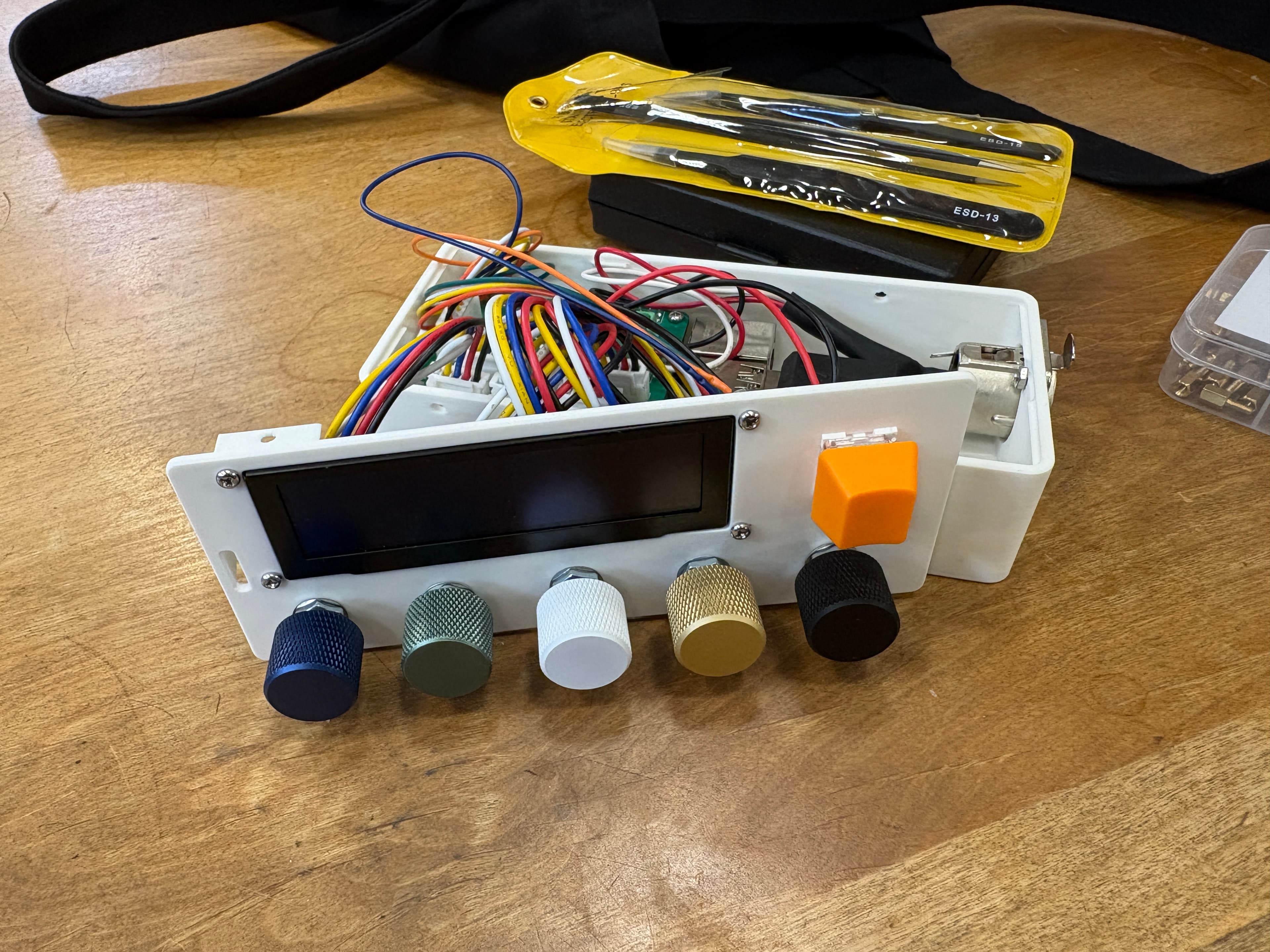
Version 4
We wanted to increase screen size, update the UI, implement a higher quality audio interface, panel mount the components on an updated pcb, print a new case with the controls at an angle for ease of use and create better cable management which got us to our current design.
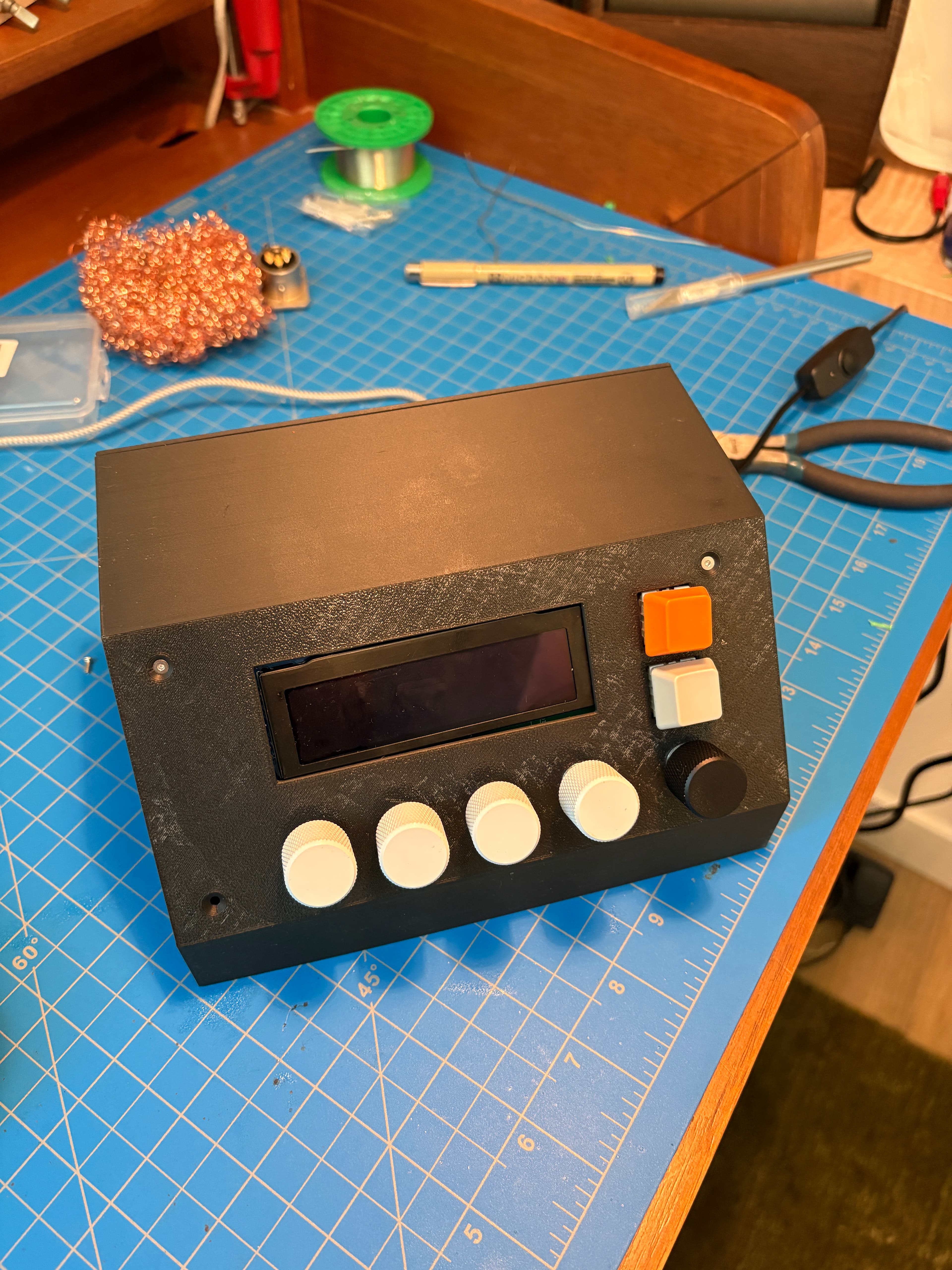
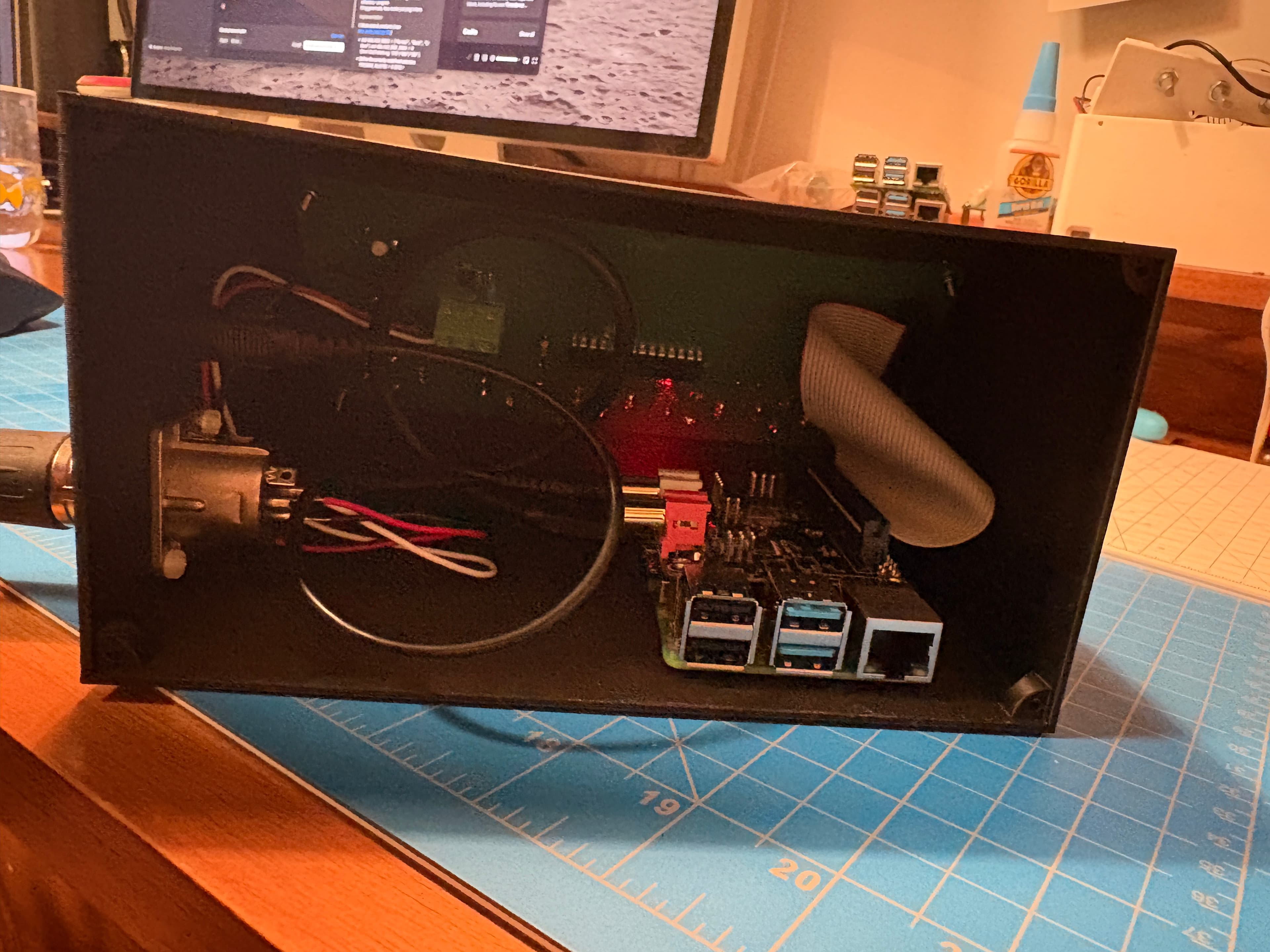
Product Installed
Next Steps
- Continue minimizing component cost by integrating a full all-in-one PCB with an onboard CPU and audio interface to get off the Raspberry Pi completely.
- Partner with manufacturers to produce components at scale so the product can be distributed to other DIY venues that want to install their own audio-reactive lighting systems at a fraction of the cost.
- Continue to refine the product to balance quality and cost.